A durable garage floor starts long before the first coat of epoxy, polyurea, or another flooring material is applied. Concrete surface preparation is one of the most important stages of a successful garage flooring project because it determines how well the coating bonds to the concrete and performs over time.
Even high-quality coatings can fail when applied to concrete that has not been properly cleaned, profiled, repaired, and evaluated. Understanding the preparation process helps property owners make better decisions about garage flooring and recognize why professional installation involves more than simply applying a coating.
Why Concrete Surface Preparation Matters
Concrete may look ready for coating, but its surface can contain contaminants, weak material, old coatings, cracks, moisture, or other conditions that interfere with adhesion. A coating applied over these problems may eventually peel, blister, crack, or wear unevenly.
Proper concrete surface preparation creates a clean, suitably textured surface that allows the flooring system to bond effectively. It also gives installers an opportunity to identify problems that should be addressed before installation.
Several factors can affect preparation, including:
- The age and condition of the concrete
- Previous paint or coating systems
- Oil, grease, dirt, and chemical contamination
- Cracks, spalling, and damaged concrete
- Moisture conditions
- The type of flooring system being installed
Because every concrete slab is different, preparation should be based on its actual condition rather than a one-size-fits-all process.
Evaluating the Concrete Before Installation
The first step in professional floor preparation is understanding what is already there. An installer should inspect the slab for visible damage, contamination, previous coatings, and other conditions that could affect the flooring system.
Cracks and deteriorated areas deserve particular attention. While minor imperfections may be addressed during preparation, larger or structurally significant problems may require additional evaluation or repair.
Moisture is another important consideration. Excess moisture can create problems for certain coating systems and may contribute to adhesion issues. Evaluating the concrete before installation helps determine which preparation and coating methods are appropriate.
Cleaning the Concrete Surface
A clean surface is essential for proper coating adhesion. Garage floors commonly accumulate oil, grease, tire residue, dirt, dust, and other contaminants that can interfere with bonding.
Cleaning should remove contaminants rather than simply spread them across the surface. Depending on the floor’s condition, professional installers may use mechanical cleaning methods, appropriate cleaning agents, or a combination of techniques.
However, cleaning alone does not necessarily make concrete ready for coating. The surface may still require mechanical preparation to remove weak material and create the appropriate profile.
Creating the Right Concrete Surface Profile
One of the most important parts of concrete surface preparation is creating a suitable surface profile. Concrete coatings need more than a visually clean slab. The surface must provide the physical characteristics needed for the coating system to establish a strong bond.
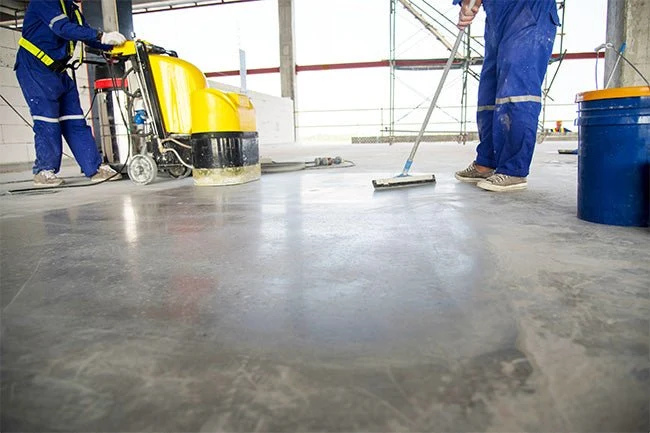
Mechanical preparation methods can include grinding, shot blasting, or other professional techniques selected according to the concrete and flooring system.
These methods can help:
- Remove weak surface material.
- Eliminate remnants of old coatings.
- Expose a stronger concrete surface.
- Create an appropriate texture for adhesion.
- Improve consistency across the installation area.
The correct surface profile depends on the coating system and condition of the slab. Too little preparation can compromise adhesion, while unnecessary preparation may create additional work without improving the finished result.
Addressing Cracks and Surface Damage
Preparation is also an opportunity to address concrete defects before they become hidden beneath a new flooring system.
Small cracks, pits, spalled areas, and other imperfections can affect the appearance of the finished floor. Certain forms of damage may also indicate underlying issues that should be understood before installation.
A professional flooring contractor can determine which imperfections require repair and which can be accommodated by the selected flooring system.
Repairs should also be compatible with the coating system. An unsuitable repair material can create differences in adhesion, flexibility, or surface texture.
Removing Existing Coatings
Some garages have previously painted or coated floors. Applying a new system over an existing coating requires careful evaluation because the condition of the old material becomes part of the new installation.
Loose, peeling, poorly bonded, or incompatible material may need to be removed. Even an old coating that appears intact should be evaluated for adhesion and compatibility before becoming part of a new flooring system.
This is why concrete surface preparation should be treated as a technical installation step rather than a quick cleaning process.
Choosing Preparation Methods for the Flooring System
Different garage flooring systems can have different installation requirements. Epoxy, polyurea, polyaspartic, and other coating technologies may require specific surface conditions for successful application.
The preparation process should therefore be selected alongside the coating system. The installer may consider:
- Required concrete profile
- Coating thickness
- Curing requirements
- Surface temperature
- Moisture conditions
- Existing coating compatibility
- Expected traffic and use
This approach helps ensure that preparation supports the performance characteristics of the flooring system.
Common Concrete Preparation Mistakes
Homeowners sometimes underestimate preparation because it is less visible than the finished surface. Several shortcuts can create problems later.
Coating Over Contaminated Concrete
Oil and grease can interfere with adhesion. Simply applying a coating over contaminated areas does not solve the underlying problem.
Skipping Mechanical Preparation
A floor can appear clean while still lacking the surface characteristics needed for reliable coating adhesion.
Ignoring Existing Damage
Cracks, weak concrete, and deteriorated areas should be evaluated before they are covered by a new flooring system.
Using the Same Preparation Method Everywhere
Different slabs have different conditions. A method that works for one garage may not be appropriate for another.
How Proper Preparation Supports Long-Term Performance
A garage floor must withstand more than everyday foot traffic. Depending on how the space is used, it may encounter vehicle traffic, dropped tools, dirt, moisture, chemicals, tire contact, and repeated cleaning.
Proper preparation gives the flooring system a better foundation for handling these demands.
Good preparation can contribute to:
- More consistent coating adhesion
- A cleaner finished appearance
- Better coating uniformity
- Reduced risk of premature peeling
- Improved durability
Preparation cannot correct every underlying concrete problem. Structural movement, significant moisture intrusion, or serious slab deterioration may require solutions beyond surface preparation.
Building a Better Garage Floor From the Ground Up
A professional garage flooring installation involves connected steps. Concrete evaluation influences preparation, preparation influences adhesion, and adhesion affects how the coating performs under everyday conditions.
That is why concrete surface preparation deserves as much attention as the visible finish. A beautiful garage floor is valuable, but appearance is only one part of a successful installation.
For homeowners considering a new garage floor, asking how the concrete will be evaluated and prepared can provide useful insight into the process.
A properly prepared slab provides the foundation for a cleaner, more durable, better-performing garage floor. When preparation, coating selection, application, and maintenance work together, the finished surface can better meet the demands of an active garage.
To learn more about professional garage flooring solutions and how proper concrete surface preparation can support a long-lasting floor, visit Superior Garage Flooring at superiorgarageusa.