There are certain parts of a home people remember without realizing they remember them. A warm kitchen during winter. The sound of old wooden stairs. Morning sunlight through a living room window.
And then there’s the front entrance.
It’s funny, really. Most people walk through their front door every day without giving it much thought until something changes. A fresh coat of paint, new hardware, better lighting — suddenly the whole house feels different somehow. More welcoming. More complete.
That’s because entrances carry emotional weight. They’re the first impression for guests, but they also shape how homeowners experience their own space day after day.
Lately, more homeowners have started treating entryways as an actual design feature instead of just a functional necessity. And honestly, it makes sense.
The Front Door Quietly Defines the Home
Think about the houses you naturally notice while driving through a neighborhood. Chances are, the entrance plays a huge role in why they stand out.
Large windows matter. Landscaping matters too. But a thoughtfully designed entryway anchors everything together.
Beautiful front doors create a focal point without needing flashy decorations or overdone styling. Sometimes it’s the material that catches attention. Sometimes it’s proportion or texture. Other times, it’s simply how naturally the entrance fits the architecture around it.
A friend of mine renovated his home last year and spent weeks debating flooring options while barely considering the entrance. Near the end of the project, he swapped out the old builder-grade front door almost as an afterthought. Oddly enough, that single change ended up making the entire renovation feel finished.
The house suddenly had personality.
That’s the thing about entrances. They don’t just complement a home — they shape how the whole property is perceived.
Design Trends Are Becoming More Personal
For a long time, home design trends felt pretty predictable. Everyone chased the same look at the same time. White kitchens. Gray floors. Farmhouse everything. Then minimalism took over. Then warmer natural tones started creeping back in.
But lately, people seem less interested in copying trends exactly and more interested in building spaces that genuinely feel like theirs.
That shift has influenced entryways too.
Instead of overly ornate doors or generic mass-produced styles, homeowners are leaning toward cleaner lines, richer materials, and architectural balance. A lot of modern entrances feel calmer now — less decorative for the sake of decoration.
That’s where contemporary design has found such a comfortable place in residential architecture. It’s not necessarily cold or ultra-modern anymore. In many cases, contemporary styles simply focus on intentional simplicity. Better proportions. Better materials. Better flow.
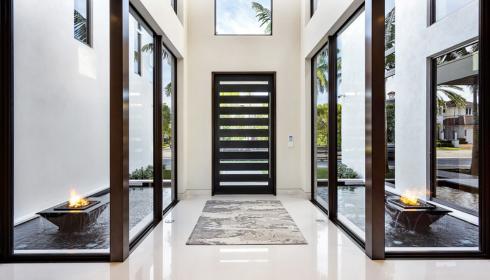
Large glass panels paired with dark metal frames. Natural wood textures against matte black hardware. Soft lighting that highlights structure instead of overpowering it.
The result feels elevated without trying too hard.
Small Exterior Changes Have a Bigger Impact Than Expected
People often underestimate how much exterior appearance affects the overall feel of a property. Not just for resale value, either. Even emotionally, it changes the way homeowners connect with their space.
There’s a reason people pause after completing a landscaping project or repainting the exterior. The home suddenly feels refreshed again.
Improving curb appeal works the same way. And interestingly, entry doors tend to deliver one of the biggest visual transformations compared to many other exterior upgrades.
Unlike large-scale remodels, replacing or redesigning an entrance can dramatically change the atmosphere without requiring an entire reconstruction project.
A darker door color can create contrast and depth. Glass inserts can introduce warmth and natural light. Oversized hardware can add subtle sophistication. Even changing the proportions around the frame can make the home feel more balanced architecturally.
None of these details sound life-changing on paper. Together, though, they completely alter perception.
Materials Matter More Than Trends
One thing homeowners eventually realize is that timelessness matters more than chasing temporary styles.
Trendy designs look exciting for a while, but quality materials tend to age more gracefully. That’s partly why wood, steel, iron, and natural stone remain popular despite decades of shifting trends.
People want entrances that still feel relevant years later.
And honestly, durability affects emotional satisfaction more than most realize. A door that sticks every winter or fades badly after two summers becomes frustrating fast, no matter how stylish it looked initially.
That’s why homeowners are paying closer attention to craftsmanship now. Strong hardware. Weather-resistant finishes. Solid construction. Details that quietly improve everyday life instead of merely photographing well online.
Because eventually, living in a home matters more than staging one.
The Emotional Side of Coming Home
What makes entryways so interesting is that they sit somewhere between architecture and emotion.
A front entrance isn’t just about appearance or security. It’s tied to routines and memories. Kids dropping backpacks by the door after school. Guests arriving during holidays. Quiet mornings stepping outside before the neighborhood wakes up.
Over time, the entrance becomes part of daily life in ways people rarely think about consciously.
And maybe that’s why thoughtful entry design feels meaningful. Not because it’s luxurious or dramatic, but because it subtly shapes the experience of home itself.
The best entrances don’t scream for attention. They simply feel right. Balanced. Comfortable. Connected to the house around them.
In the end, that’s probably what homeowners are really searching for — not perfection, but a home that feels authentic from the very first step inside.