Behind the Mechanics of a Smooth-Running Door
For most property owners, operating a garage door is an effortless daily ritual. You press a button on your visor remote, hear a reassuring hum, and watch a massive two-hundred-pound wall of steel glide effortlessly overhead. It feels like simple automated convenience until the morning your door shudders to a halt midway up the tracks with an ear-splitting metallic bang. Behind that seamless vertical movement lies a tightly wound system of high-tension springs, counterbalancing cables, precision tracks, and electronic logic boards. When an experienced technician steps into your garage for a scheduled maintenance visit, they are not just spraying lubricant on noisy hinges; they are conducting a comprehensive engineering audit designed to prevent catastrophic mechanical failure.
The Torsion Spring and Cable Assembly Calibration
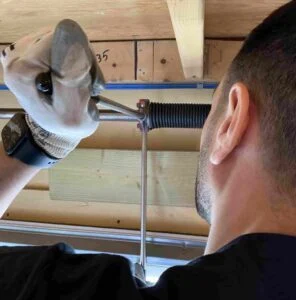
At the core of every overhead door system is the counterbalance assembly, which does the heavy lifting long before the electric opener ever turns a gear. Torsion springs, mounted on a solid steel shaft directly above the door header, store immense torque when the door is closed. During a professional service inspection, a technician tests the door’s static balance by disengaging the automatic opener and manually lifting the panel to mid-travel height. If the door drifts down or shoots up, the springs require precise quarter-turn adjustments with specialized winding bars. Technicians also visually inspect the high-tensile aircraft cables for fraying, oxidation, or improper wrapping around the aluminum cable drums, ensuring the door lifts evenly without binding or slipping off track.
Track Realignment, Roller Tuning, and Hardware Tightening
Even tiny shifts in your home’s framing can throw vertical and horizontal tracks out of square. During service, technicians utilize spirit levels and laser guides to check track plumb, adjusting the mounting jamb brackets to maintain exact clearances along the entire travel path. Rollers also undergo rigorous evaluation; worn plastic rollers or seized steel bearings create severe friction that overworks the opener motor. Replacing degraded rollers with commercial-grade, sealed eleven-ball-bearing nylon units dramatically reduces noise and operational drag. Furthermore, because thousands of vibration cycles loosen structural fasteners over time, every hinge, track bracket, and bearing plate bolt is torque-tightened to prevent panel slop and premature metal fatigue.
Opener Drive Tuning, Force Adjustments, and Travel Limits
The motorized opener hanging overhead acts as the brain and guide for your door, so it needs its own mechanical checkup. Whether your system uses a full-drive chain, reinforced steel belt, or direct-drive assembly, proper drive tension is essential to prevent rail bow and sprocket wear. Technicians inspect the internal nylon drive gear inside the motor housing for plastic shaving buildup, which indicates improper gear mesh or excessive door drag. Technicians recalibrate internal travel limit switches to ensure the panel seals snugly against the floor threshold without over-compressing the bottom weatherseal or straining the motor housing at the top of the travel cycle.
Weatherproofing, Astragal Seals, and Perimeter Protection
A well-serviced door does more than open and close smoothly; it defends your garage interior against driving rain, drafty winds, and unwanted pests. Over time, the flexible rubber astragal seal running along the bottom panel dries out, cracks, or flattens under constant pressure, leaving gaps at the concrete corners. Professional maintenance includes replacing worn bottom seals with cold-weather synthetic rubber designed to remain flexible in sub-zero temperatures. Technicians also adjust the exterior vinyl perimeter weatherstripping to create a tight thermal envelope against the door faces without binding the panels as they transition through the curved track radius.
Electronic Safety Eye Alignment and Auto-Reverse Testing
Safety is non-negotiable with heavy moving machinery, so electrical safety verification is a top priority during any technical check. Infrared photoelectric safety eyes mounted near the floor must be perfectly aligned, clean, and free of cobwebs or moisture condensation. Technicians verify beam continuity and run a mechanical force obstruction test by placing a solid block of wood in the door’s path. If the bottom edge contacts the obstruction and doesn’t reverse within two seconds, technicians recalibrate the opener’s internal sensitivity control boards to meet strict UL 325 safety standards, preventing accidental property damage or personal injury.
Investing in Longevity Through Routine Technical Maintenance
Ignoring minor squeaks, uneven travel, or sluggish motor performance eventually leads to broken torsion springs, bent track sections, and costly emergency repairs. Scheduling a comprehensive residential garage door service ensures a skilled specialist thoroughly inspects, lubricates, and calibrates every mechanical component, electronic sensor, and structural bracket. Proactive maintenance extends your system’s lifespan, protects your motor warranty, and ensures quiet, dependable performance every time you click that remote. Protect your property investment and maintain daily peace of mind by scheduling your multi-point technical door inspection today.